Guide
The Overcrowded Bus in Bengaluru: What a Cheap Peak-Hour Commute Really Costs
A ₹1,200 BMTC pass is cheap, but a packed peak-hour bus costs time, comfort and security. Here is what the data says and how to weigh the real price of your commute.
By Flow TeamPublished 6 min read
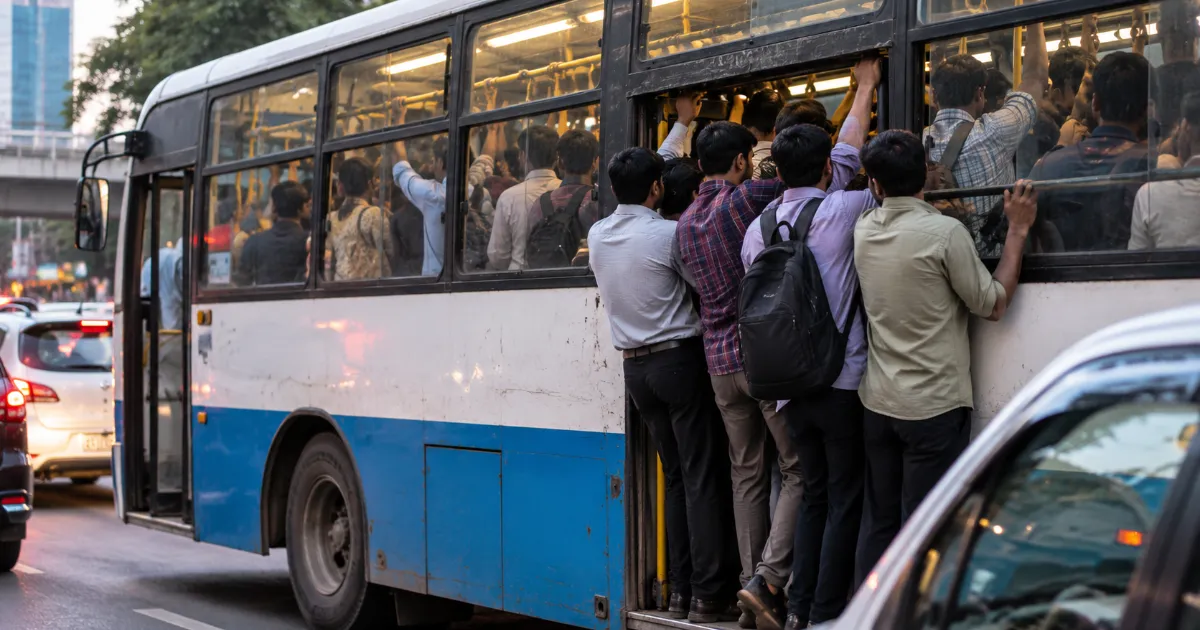
An overcrowded bus in Bengaluru at peak hour is cheap in rupees but expensive in almost everything else: time, comfort and security. BMTC's city-bus monthly pass continues to cost ₹1,200, which makes the bus one of the most affordable ways to reach work. The harder question is what that low fare quietly takes from you every working day, and why it does not have to stay that way.
This article looks at the real cost of the packed peak-hour bus, using published figures where they exist and clearly marking where they do not.
Why Bengaluru's buses fill up at peak hour
The short answer is that too many people depend on too few buses. BMTC carries nearly 48 lakh passengers a day, more than Delhi's DTC (about 42 lakh), according to The Federal's July 2026 analysis. The same report says each BMTC bus carries significantly more passengers on average than buses in Delhi or Mumbai, and links that to overcrowding at peak hours.
Fleet figures vary by source, so treat them with care. The Federal puts the BMTC fleet at about 6,500 buses, while other published accounts, citing the Transport Minister in October 2025, put it above 7,000, including more than 1,700 electric buses. The two numbers cannot both describe the same day, and BMTC's own latest count should be treated as the authority.
As a rough illustration (our arithmetic, not an official figure), 48 lakh trips spread over 6,500 to 7,000 buses is roughly 680 to 740 trips per bus per day. For comparison, 42 lakh trips over about 7,000 Delhi buses is about 600. Averages hide the real pressure, because demand is not spread evenly. It is concentrated in the morning and evening peaks, on corridors that lead to large office clusters.
BMTC has tried to respond. In May 2025 it announced at least 100 additional services on 25 high-density routes and said 2,286 conductors were joining. Adding services helps, but it competes for road space with everyone else.
The time cost: slow roads slow the bus too
A bus cannot outrun the traffic it sits in. The TomTom Traffic Index for 2025 ranked Bengaluru as the world's second most congested city, with an average rush-hour speed of 13.9 km/h. A 10 km trip took about 41 minutes in the morning peak and about 45 minutes in the evening peak. TomTom estimates commuters lost about 168 hours, or seven days, to rush-hour delay over the year.
TomTom measures general traffic, not buses specifically, so these figures describe the road a bus travels on rather than a bus journey from door to door. A bus commute also includes the walk to the stop, the wait, a possible change at Majestic or another interchange, and the walk at the end. Those minutes do not appear in any index, but anyone who rides daily knows them.
The comfort and safety cost of standing for an hour
The cost of a crowded bus is physical before it is financial. Standing for 45 minutes or more in a packed, warm vehicle, often holding a laptop bag, leaves many office-goers tired before the working day begins. There is no Bengaluru-specific study we can cite that measures this, so we will not quote one. It is, however, a frequent complaint among daily bus riders.
Crowding also creates openings for theft. A Deccan Herald report described a gang that targeted BMTC passengers by feigning illness and crowding around a victim, who lost ₹25,000. The report did not describe that particular bus as crowded, but it shows how easily a distracted passenger can be targeted. The practical lessons are simple: keep valuables in front pockets or inner compartments, avoid carrying large amounts of cash, and move away from people who crowd you without reason.
What the "cheap" commute actually costs
A fair comparison needs more than the fare. Consider what the packed-bus commute asks of you:
- Money: among the lowest out-of-pocket costs of any option, with a ₹1,200 monthly pass for city buses.
- Time: a journey that depends on road speeds near 14 km/h in the peak, plus walking and waiting.
- Comfort: often standing, with limited space for bags and little control over the temperature.
- Predictability: you cannot always board the first bus, and arrival times shift with traffic.
- Personal security: more exposure to pickpocketing in dense crowds.
None of this makes the bus a poor choice. For lakhs of people it is the only affordable option, and the answer to a crowded bus is more and better public transport, not fewer riders. It does mean the sticker price understates what the commute asks of you.
Practical ways to make a crowded commute easier
If the bus is your only option, a few habits help. Check the route and timing before you leave and, if your office allows flexible hours, try leaving a little earlier or later, since buses are usually fullest in the middle of the peak. Board at the start of a route where possible rather than mid-route stops, where buses arrive already full. Keep belongings secure and your phone out of easy reach.
For employers, staggered start times and a clear hybrid schedule reduce the pressure on the same corridors at the same hour.
Where shared fixed-route options fit in
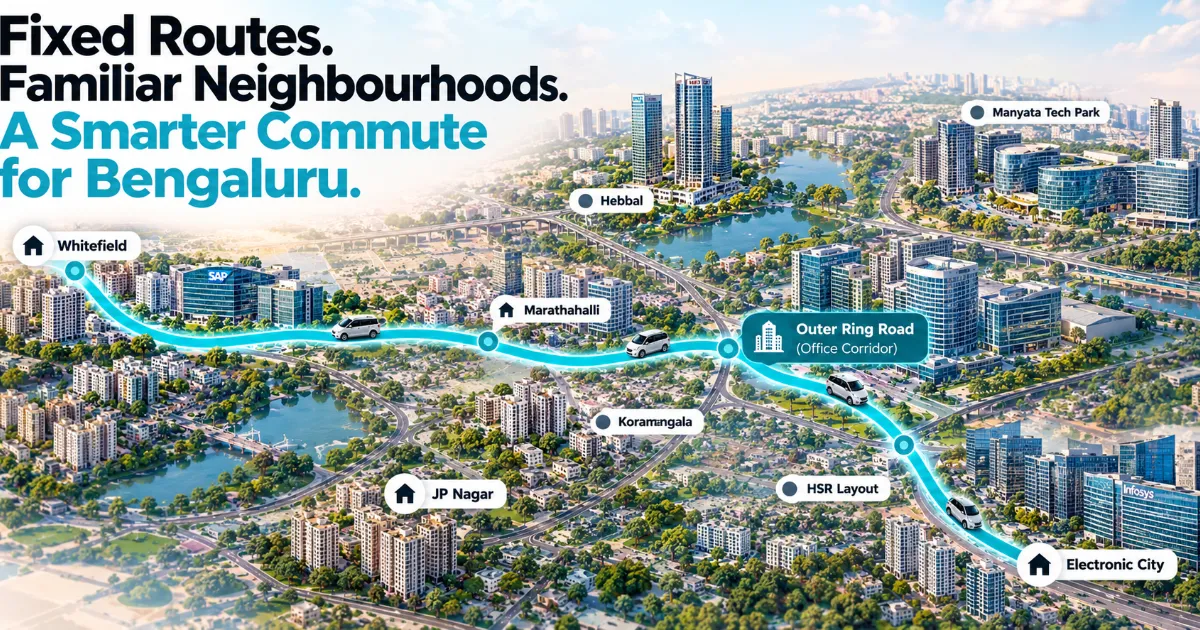
Some commuters will prefer to pay more for a predictable seat. A fixed-route shared cab sits between a bus and a solo cab ride: set pickup windows, a consistent group of co-passengers and a flat monthly fee. Flow is rolling out this model for Bangalore office commutes along corridors such as Whitefield, Electronic City, Manyata Tech Park and Sarjapur Road. Flow is currently taking riders through a waitlist, has not published fares on its site, and its safety page describes its own verification and tracking measures, which are the company's statements rather than independent audits.
If you want to compare the options in more detail, our guide to the office pickup and drop services in Bangalore and our piece on why peak hour wears you down cover how these services work.
Frequently asked questions
Why are Bengaluru buses so crowded at peak hour? Demand is concentrated in two short windows on office corridors, and BMTC's daily ridership of nearly 48 lakh is carried by a fleet of roughly 6,500 to 7,000 buses, depending on the source.
How much does a BMTC monthly pass cost? The monthly pass for ordinary city buses costs ₹1,200, according to BMTC's July 2026 clarification. A separate ₹1,500 pass applies to routes in the expanded service area beyond city limits.
How slow is peak-hour traffic in Bengaluru? TomTom's 2025 index recorded an average rush-hour speed of 13.9 km/h, and a 10 km trip took about 45 minutes in the evening peak.
Is a crowded bus unsafe? Crowding raises the chance of discomfort and theft. Passengers can reduce the risk by keeping valuables secure and staying alert, and by avoiding footboard travel.
The bottom line
The overcrowded bus is cheap because the commuter absorbs the cost in time, comfort and stress. Better frequency on high-demand routes, more buses and smarter office schedules would lower that hidden price. Until then, the sensible approach is to count all of it, not just the fare, when you decide how to reach work.
- #BMTC
- #Bengaluru commute
- #public transport
- #peak hour
- #office commute
- #urban mobility
- #bus crowding